Hana's infertility
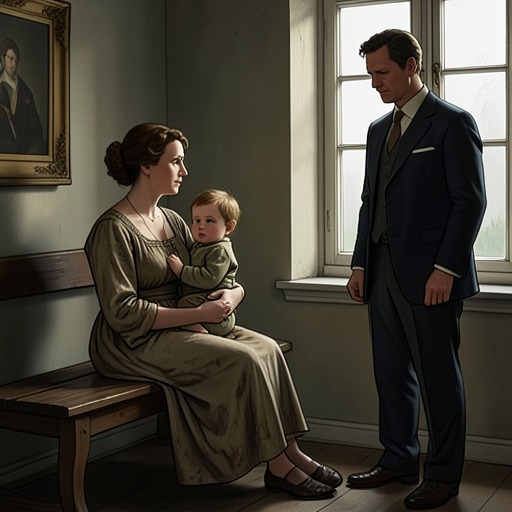
The Glass RoomHana’s infertility is a recurring source of private longing that surfaces in her conversations with Liesel. The narrative presents it not as a diagnosis with an explained cause or treatment, but through Hana’s own statements: she sometimes wants a baby, has tried for one over a long period, and says that nothing happens. Her disclosure becomes especially charged beside Liesel’s pregnancies, turning their closeness into a space where affection and envy coexist.
Longing and the first disclosure
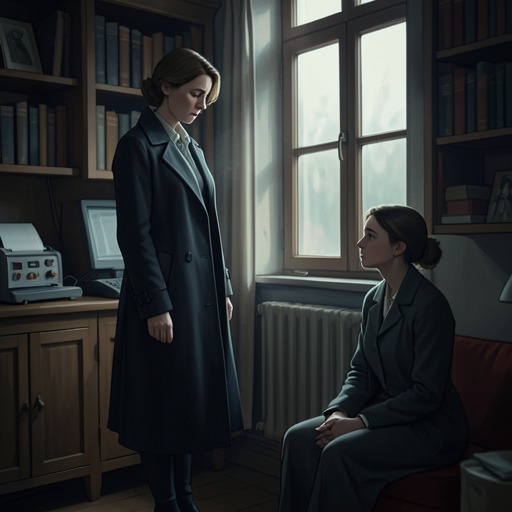
In an earlier conversation, Hana dismisses Liesel’s marriage to Viktor as a mere contract, while Liesel insists that it is a marriage of minds. The exchange shifts when Hana distinguishes Liesel’s baby from the marriage itself, calling the child perhaps the last sacred thing and admitting that she envies Liesel. She adds that, however hard she tries, nothing ever seems to happen with her. The admission is tentative rather than constant: when Liesel asks whether she actually wants a baby, Hana says that she does sometimes, particularly when she feels lonely.
Liesel answers with delighted surprise, and the scene briefly draws the friends together around the possibility of new life. Liesel touches her belly and reports feeling a movement, a tiny fluttering certainty that makes her exclaim that she can feel him. Hana reaches forward and asks to see. The contrast is quiet but consequential: Liesel’s pregnancy is an immediate, shared physical fact, while Hana’s desire remains an unfulfilled hope. Hana’s attention to Liesel’s joy shows that envy does not cancel her capacity for tenderness.
Trying to conceive
The subject returns as Liesel grows into a second pregnancy in the luminous house on Blackfield Road. She wears white and walks barefoot through the house; Hana contrasts this new home with her own life in what she calls a museum, because Oskar will not move and prefers four solid walls. Against that difference in domestic circumstances, Hana again points to Liesel’s pregnancy and says she has been trying for a baby for ages. Liesel’s surprise prompts Hana to confirm that she has been trying to become pregnant.
Hana then confides that she has even tried to become pregnant by Němec. She lowers her voice although the two women are alone in the Glass Room, making the admission sound difficult to entrust to speech. Liesel reacts with a single shocked interjection. Hana makes a face and describes herself as sterile, using a self-deprecating comparison; the scene supplies no medical explanation for her infertility and does not establish what, if anything, she has been told by a physician. Her account instead emphasizes the persistence of her efforts and the frustration of their apparent failure.
Intimacy, envy, and unequal outcomes
Hana’s effort to conceive by Němec is particularly revealing because she describes it in relation to her longing for a child, not as evidence of a separate resolution to her relationships. The passage does not explain the arrangement further or state what Němec wanted. It does make clear that Hana has tried more than one route toward pregnancy, while remaining unable to achieve the outcome she seeks. The difficulty is therefore both personal and relational: her desire has entered the intimate confidences she shares with Liesel, but it has not produced a child.
The pregnancies sharpen the difference between the women without reducing their friendship to rivalry. Hana’s first admission comes when Liesel is already pregnant; the second comes as Liesel carries another child. Each time, Liesel’s experience gives Hana an occasion to voice her own. In the earlier scene Hana asks to see the movement Liesel feels, and later she entrusts Liesel with a more private account of her efforts. The recurring pattern joins disclosure to care: Liesel is the person to whom Hana can admit both envy and the extent of her attempts, while Hana remains engaged with Liesel’s pregnancy rather than withdrawing from it.
Narrative significance
The narrative places Hana’s infertility beside Liesel’s visible pregnancies and the physical setting of the Glass Room. Liesel’s pregnancy is rendered as a concrete presence in the house, while Hana’s account consists of speech about trying, loneliness, and disappointment. That contrast gives the conversations their emotional pressure without turning infertility into a confirmed medical history beyond Hana’s own description. Nor does the evidence establish a final change in her condition or an eventual outcome. What it does establish is a repeated, unresolved longing: Hana sometimes wants a child, has tried for one over a long period, and tells Liesel how far those efforts have gone.